
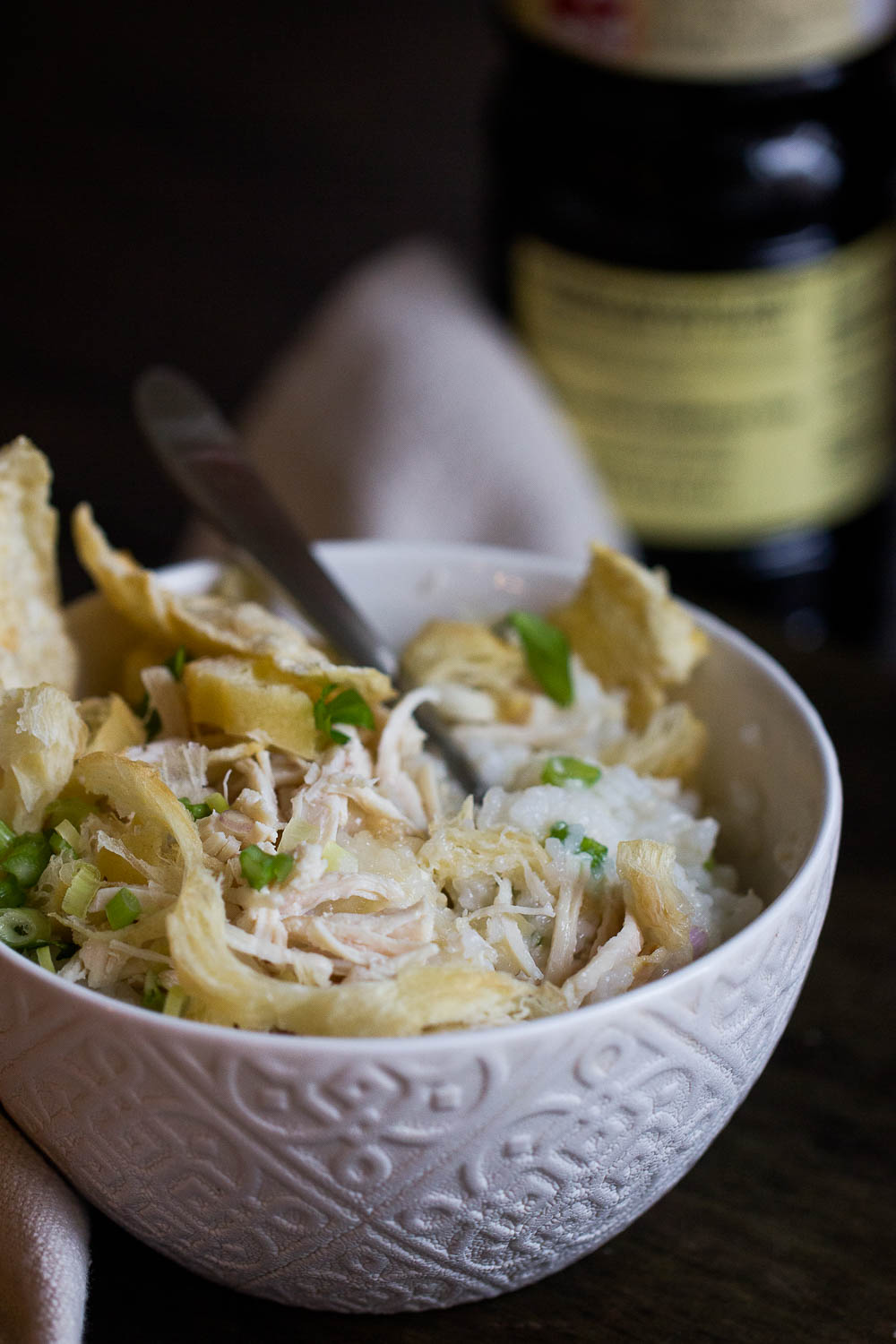
There’s so much to love about this bubur ayam (Indonesian chicken congee or rice porridge). It’s simple to make, super comforting, and will leave you feeling nourished! Enjoy this bubur with a splash of spicy peanut sauce and experience an Indonesian breakfast.
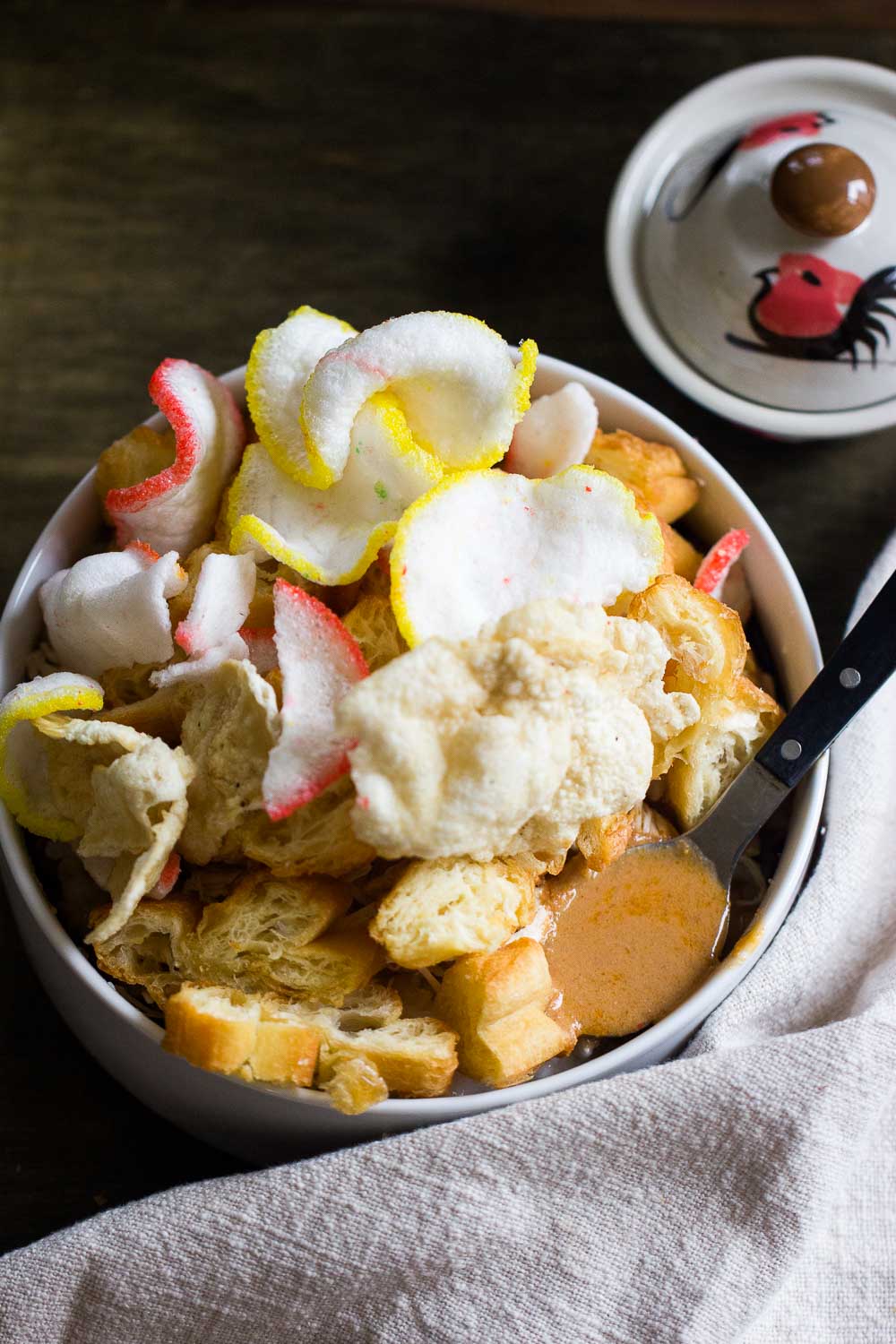
Indonesian breakfast? Do you mean they eat congee for breakfast? Yes, we eat carbs for breakfast. Rice, noodles, bread, or even congee which is known as bubur ayam.
Now that the cold weather is here (finally!), I’ve been cooking super easy and comforting recipes. Something that is not soup or noodles. Something that reminds me of where I grew up, my childhood, and my dad’s favorite food. Bubur ayam or Indonesian chicken congee.
What is bubur ayam
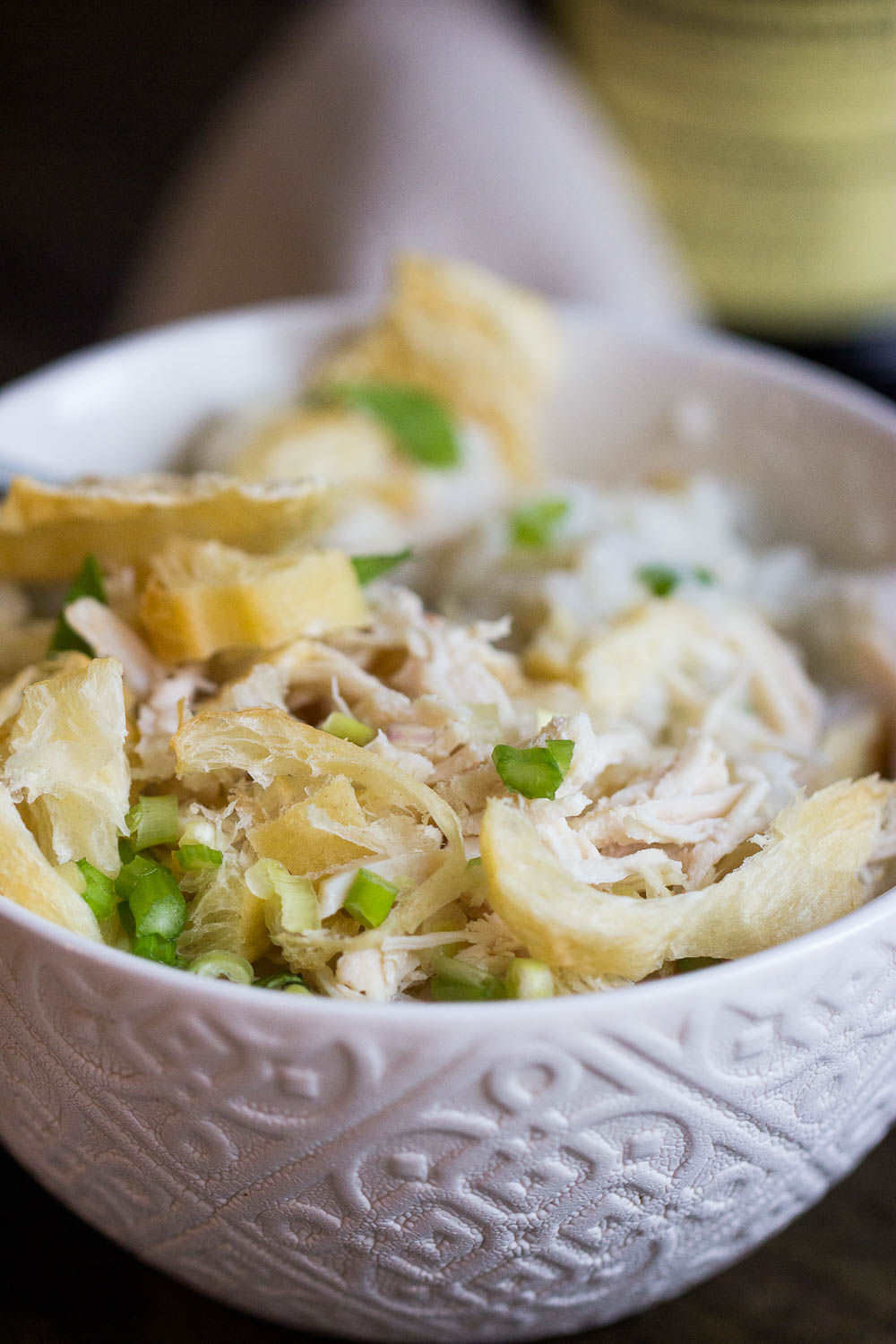
Bubur means congee (rice porridge), and ayam means chicken. However, Indonesian chicken congee is entirely different, unlike any other congee you’ve seen or tasted. The congee is plain with a thicker consistency than Hong Kong or Taiwanese congee and top with shredded chicken, Chinese doughnuts, shrimp crackers, or emping melinjo (Indonesian crackers), and roasted peanuts, which I skip in this chicken congee recipe, but trust me this is still the best chicken congee recipe.

Is bubur a sweet or savory dish
When Indonesian refer to bubur, they mean chicken congee, so it’s a savory dish. But, there are so many kinds of bubur or congee in Indonesia.
- Indonesian rice pudding or bubur sumsum. It is made from rice flour, topped with coconut milk and palm sugar syrup
- Bubur candil is another traditional sweets, made of glutinous rice flour , then shape it like small ball and dip in palm sugar porridge.
- Then my favorite bubur ketan hitam or pulut hitam recipe. It’s a combination of black glutinous rice and coconut milk
- Pulut hitam is usually enjoyed together with bubur kacang hijau which is made from mung beans (kacang hijau), coconut milk, and palm sugar
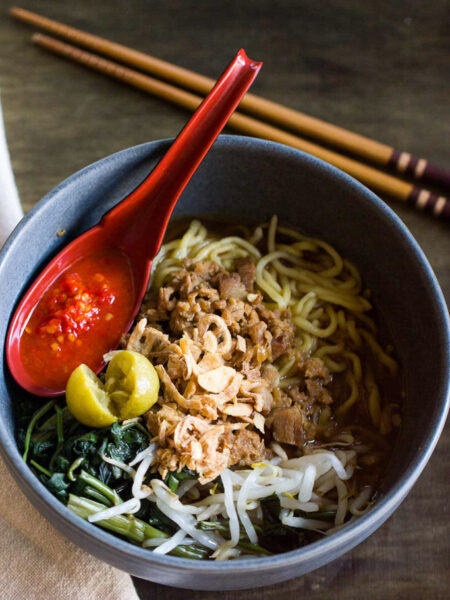
- Another savory dish is bubur Betawi which has been adapted and cooked by using local spices and herbs. It is usually served by drenching the yellow-turmeric chicken broth over congee

The ingredients
Making bubur ayam is easy and doesn’t require lots of ingredients. You will need:
- Rice. You can cook congee in a rice cooker or on a stove top
- Chicken, either skinless boneless or with boned in and skin intact
- I use two sauces in this recipe: fish sauce and soy sauce
- White pepper and yes, it has to be white pepper
- Topping: green onions, fried shallot, Chinese doughnuts
How to cook chicken congee
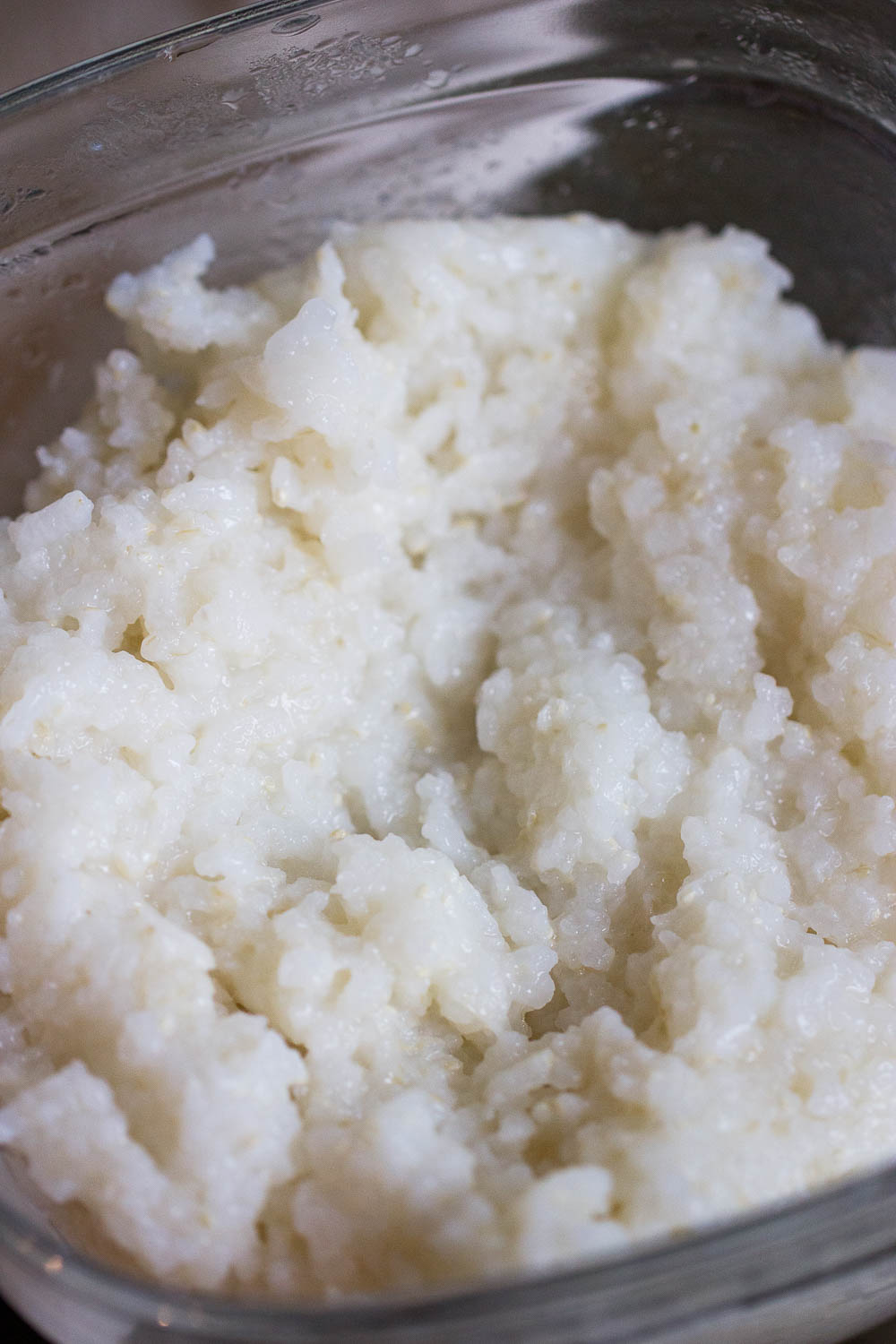
- Cook the rice in a rice cooker or on a stove. With a rice cooker, it usually comes with a measurement for rice and water; however, I usually use a rice cup and measure 1 cup of rice : 5 cups of water
- Boil the chicken in water or chicken broth to instantly up the flavor. Don’t let them overcook or they will become rubbery. Remove from the pot and let it rest about 10 minutes, then shred it
- Prepare the topping by cutting the green onion, Chinese doughnuts, fried shallots, and crackers
- To assemble: scoop congee to a bowl. Add fish sauce, soy sauce, and white pepper. Top congee with shredded chicken, green onion, Chinese doughnuts, fried shallots, and crackers
How to cook chicken porridge with a rice cooker
A rice cooker usually comes with a measurement to cook for rice and a setting to cook porridge or congee. However, I usually use a rice cup and measure 1 cup of rice : 5 cups of water.
Type of rice for chicken congee
In case you missed it, I share everything about rice in this post. Any long or medium grains work for congee, but I don’t recommend short grains. Short-grain rice has more starch and will make stickier rice porridge.
When to eat bubur
Anytime! Some people usually eat it when they feel under the weather, but you can enjoy bubur, sweet or savory, anytime. Bubur candil is usually more popular during Ramadhan. Bubur ayam is widely available for breakfast, lunch, dinner, or even supper. Yes, the weather in Indonesia can be as hot and humid as New York in the summertime, but we still eat a bowl of chicken congee like no one does business!
Congee Side Dishes
There are lots of additional toppings to add. Salted duck egg, chicken intestine skewer, fried chicken gizzard, quail eggs, chicken feet, and so much more.
Storing
Chicken congee can be stored in the fridge for up to 3 days. And heat it in the microwave when you want to eat it.
Bubur ayam is comforting with a perfect creamy texture. Cooking the congee in a rice cooker reduces time significantly and makes a perfect light meal all year.
Bubur Ayam (Indonesian Chicken Congee)
Ingredients
Plain congee
- 1 cup rice
- 5 cups water
Chicken
- 2 chicken breasts preferably boneless, skinless
- 4 cups low-sodium chicken broth or water
Sauce
- Fidh sauce
- Soy sauce
- White pepper
Toppings/garnish
- Chopped green onion
- Chinese doughnuts
- Fried shallot
- Shrimp crackers
Instructions
Plain congee
- Wash and drain rice, then place in a pot along with water.
- Bring to a boil, then lower to a simmer, cover, and cook until tender and thickened into a congee consistency
Chicken
- Add chicken to a large pot over medium-high heat. Pour broth over chicken to cover
- Bring to a boil, then cover and reduce heat to medium
- Let it simmer until chicken is cooked through, about 10 minutes. Remove from pan and let rest 10 minutes; then shred the chicken
To serve
- Ladle congee into serving bowls, add 1 tablespoon of fish sauce and 1 tablespoon of soy sauce. You can adjust the taste by adding more sauce
- Add shredded chicken, then top with green onions, Chinese doughnuts, fried shallot, and crackers


this is a delicious comfort recipe!
Anything with rice makes me happy, but I wanted to try something that was new to me. This bubur ayam was so simple to make, but was so excitingly flavored. I’ll definitely be making this again.
what a fabulous recipe; especially for a special weekend dinner – i just love INdonesian cuisine!
This bubur is a delicious bowl of comfort, and so easy to make. Thanks for sharing this great recipe!
I have never tried to make this, but it looks delicious and easy. Thanks for sharing your recipe.
I have heard so many good things about congee, and now I need to try it because your recipe seems relatively easy to make.
Mmm hearty and warming on a bitter winter day like today. This looks and sounds so delicious!
This looks so hearty and so authentic! I’ve never made anything like this so I’m excited to try it!! Thanks for making this easy to follow!!
This does look super comforting and this time of the year comfort food is all I crave. I have all of the ingredients on hand and this looks easy so I will be making this next week for dinner one night.
I had congee with egg for breakfast in Thailand but have never made it myself. This chicken congee sounds like a really hearty breakfast dish. Definitely want to try it!
Thank you for sharing this dish from you culture. It looks pretty hearty and tasty!
This dish has lovely vomfort written all over it. Thanks for an explanation on Asian breakfast! Very interesting. And dlicious!