
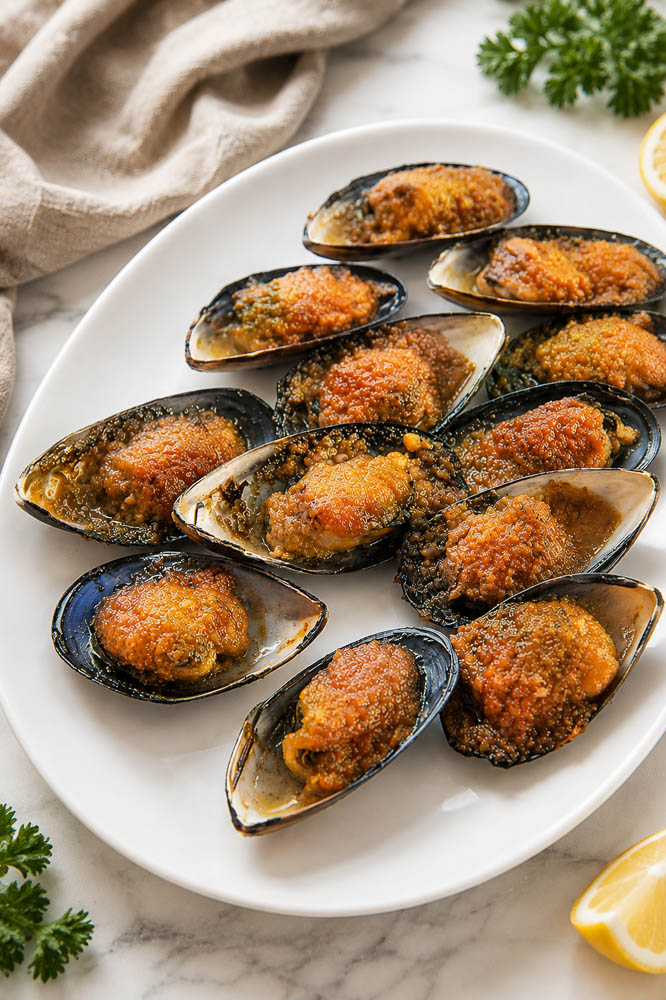
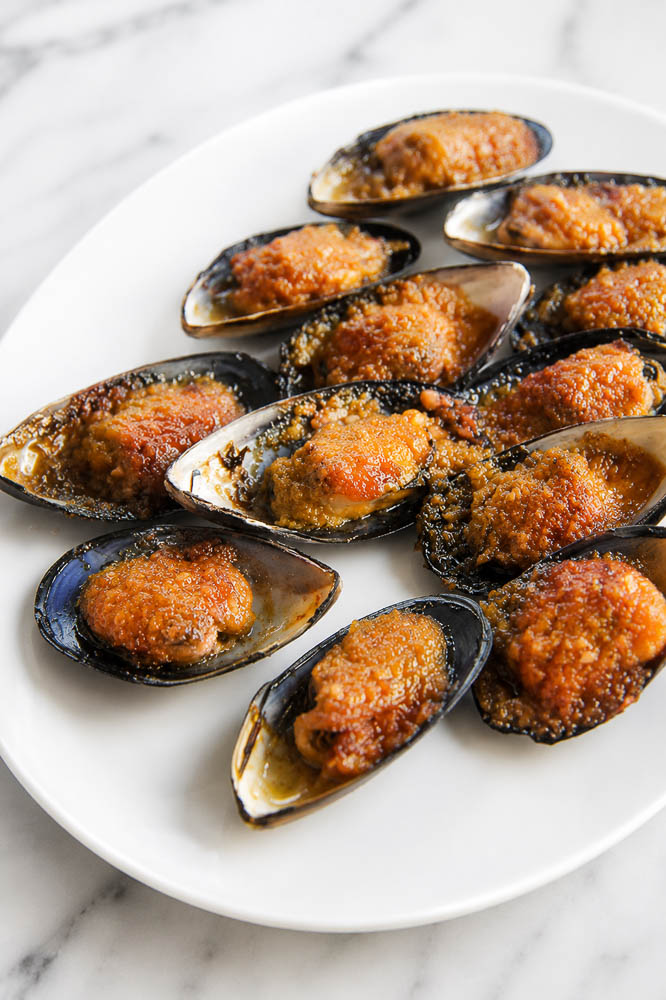
These Jimbaran-Style Grilled Mussels are topped with a buttery garlic sauce that’s sweet, savory, and slightly tangy, then broiled until the edges are bubbling and beautifully caramelized. Inspired by the grilled seafood dinners of Jimbaran, Bali, this easy mussel recipe brings those bold Indonesian flavors home without requiring an outdoor grill.
Some meals stay with you because of the food, and others stay with you because of everything happening around the food.
Jimbaran somehow gives you both.
If you’ve ever visited Bali, you may already know about the seafood restaurants lining Jimbaran Beach, where dinner often means sitting near the sand with plates of grilled seafood arriving at the table while the sun disappears over the water. Fish, shrimp, squid, clams, and mussels are cooked over high heat and served with sauces that somehow make you keep reaching for one more bite.
These Jimbaran-Style Grilled Mussels were inspired by those flavors. The mussels are first gently steamed with lemongrass and Indonesian bay leaves, then served on the half shell and covered with a buttery garlic sauce made with ketchup, honey, oyster sauce, onion, and a little lemon.
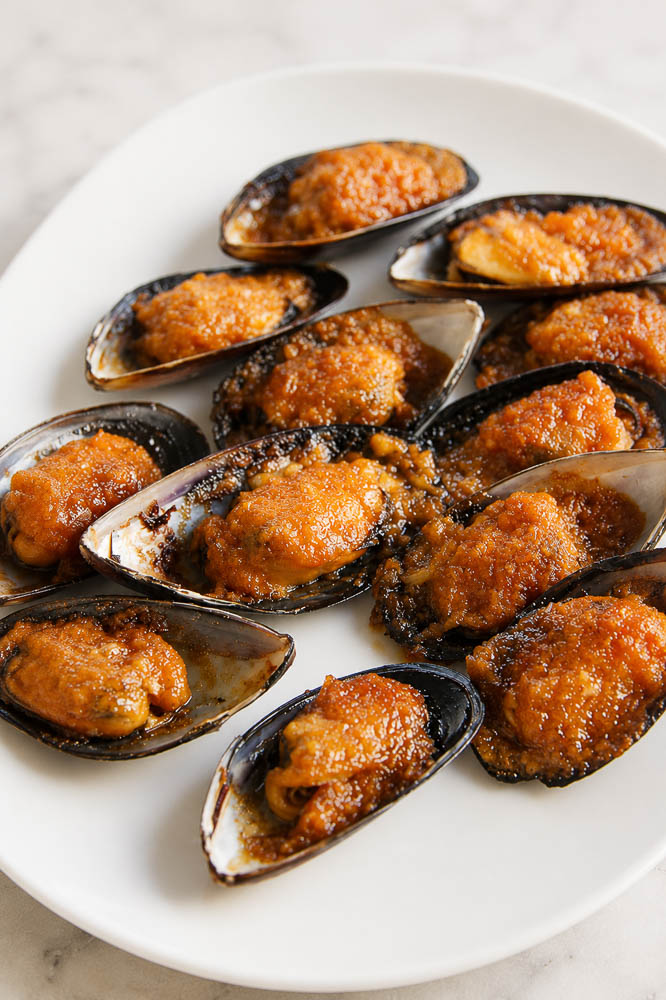
A few minutes under the broiler transforms the sauce completely. The edges begin to caramelize, the butter bubbles around the mussels, and the sweet-savory glaze becomes sticky enough to cling to every bite. You may not have Jimbaran Beach outside your window, but dinner can still travel.
What Are Jimbaran-Style Grilled Mussels?
Jimbaran is a coastal area in southern Bali known in particular for its beachfront seafood restaurants. Fresh seafood is grilled and served with bold sauces and sambal, making dinner as much about the setting and experience as the food itself.
My version takes inspiration from those sweet, savory, aromatic flavors rather than trying to recreate one specific restaurant’s recipe.
Instead of cooking the mussels entirely over charcoal, I steam them first and finish them under the broiler. This makes the recipe much easier to prepare at home while still giving the sauce those slightly charred, caramelized edges that make grilled seafood so irresistible.
And there is one major advantage. You don’t have to clean a grill afterward. I consider this excellent news.
What Do These Grilled Mussels Taste Like?
The sauce is where this recipe really comes alive.
Butter gives it richness, while garlic and onion build the savory base. Oyster sauce adds umami and saltiness, ketchup contributes acidity and a subtle tomato sweetness, and honey and brown sugar help create the glossy caramelized finish under the broiler.
Then there is fresh lemon juice, which may seem like a small addition but is important because it keeps all that richness and sweetness from becoming too heavy.
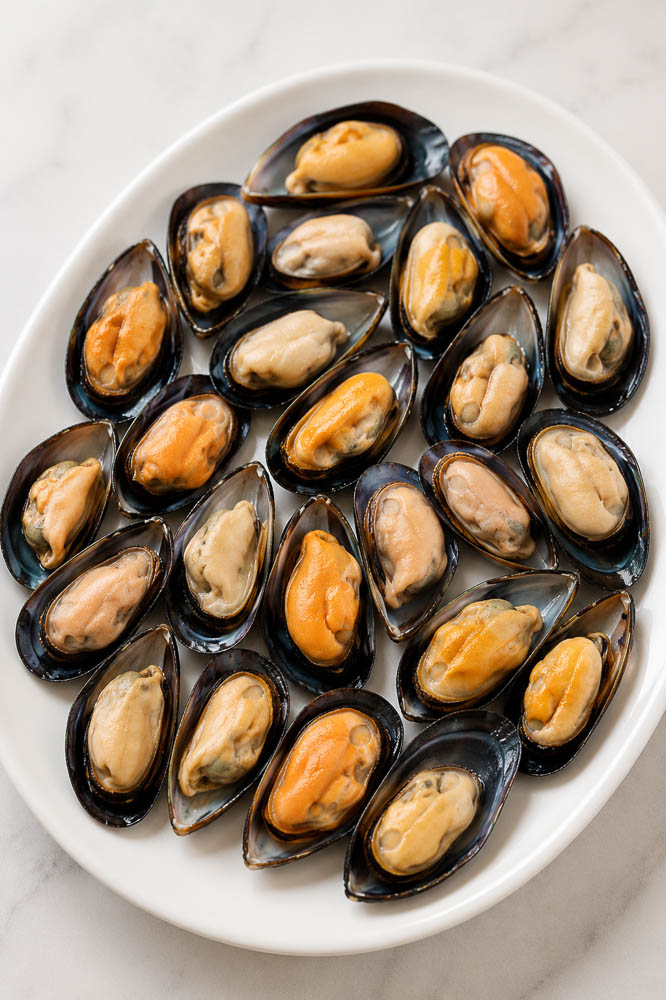
The mussels themselves are tender, briny, and naturally savory, so they can handle a sauce with plenty of personality.
Together, you get buttery, garlicky, sweet, savory, tangy, and slightly smoky flavors, especially where the sauce begins to darken around the edges.
If you prefer more heat, a little sambal or fresh red chile fits right in.
Why You’ll Love This Recipe
One reason I keep coming back to this recipe is that it looks considerably more complicated than it actually is.
The mussels only need a few minutes to steam open, and the sauce comes together quickly in a blender or food processor. Once everything is arranged on a baking sheet, the broiler does the final bit of magic. They’re beautiful enough for entertaining or date night, but easy enough that you don’t need a special occasion to make them. They’re also wonderfully messy in exactly the way good seafood should be.
Put a big platter in the middle of the table, add plenty of napkins and some lemon or lime wedges, and nobody needs individual plating.
The Secret Is the Sweet and Savory Sauce
If you’re looking at ketchup and oyster sauce sitting next to each other on the ingredient list and wondering where this relationship is going, trust the process. They work particularly well together here.
Ketchup provides sweetness, acidity, and tomato flavor, while oyster sauce brings concentrated savory depth. Honey and brown sugar help the sauce caramelize, while butter rounds everything out.
The result isn’t supposed to taste overwhelmingly sweet. Instead, you’re looking for that familiar balance found in many Indonesian sauces, where sweetness, saltiness, acidity, aromatics, and umami all show up at the same table.
For a less sweet sauce, reduce the honey to one tablespoon. If you prefer something spicy, add sambal or a small red chile when blending.
Why I Steam the Mussels Before Broiling
Technically, you could experiment with cooking mussels directly over a grill, but steaming them first makes this version much more predictable for a home kitchen. A small amount of water in a covered pot creates enough steam to open the shells without boiling away their flavor.
I also add bruised lemongrass and daun salam, or Indonesian bay leaves, to the pot. They gently perfume the mussels while they cook and give the recipe another layer of Indonesian flavor before the sauce even arrives.
Once the mussels have opened, remove the empty half of each shell and arrange the remaining halves on a baking sheet. Now you have little edible serving dishes conveniently provided by the mussels themselves. Very thoughtful of them.
A Quick Note About Daun Salam
One ingredient worth explaining is daun salam, sometimes labeled Indonesian bay leaf.
Despite the English name, it is not the same ingredient as the Western bay leaves commonly sold in American supermarkets, and the flavors aren’t interchangeable. You can often find daun salam fresh, frozen, or dried at Indonesian and some Southeast Asian grocery stores.
If you can’t find it, I would simply omit it rather than substitute a regular bay leaf. The lemongrass will still provide plenty of aroma, and the sauce is flavorful enough to carry the dish.
How to Buy and Clean Mussels
When buying fresh mussels, look for shells that are closed and intact. They should smell clean and briny rather than strongly fishy.
Before cooking, rinse the mussels under cold water and scrub away any dirt or debris on the shells. If you see a fibrous beard sticking out from the shell, pull it toward the hinge to remove it. Discard mussels with badly cracked shells.
After steaming, discard any mussels that remain closed rather than trying to force them open. Once cooked, remove the empty half-shell from each mussel before adding the sauce. This makes them easier to broil, serve, and eat.
Getting That Caramelized Finish
This is my favorite part.
After spooning the sauce generously over the cooked mussels, place them under a hot broiler for just a few minutes. Because the sauce contains honey and brown sugar, it will begin bubbling almost immediately. Watch for the edges to darken slightly and develop those sticky caramelized spots.
And I do mean watch them. This isn’t the moment to answer an email, reorganize the refrigerator, or suddenly remember you need to water a plant.
Sugar can go from beautifully caramelized to well, that escalated quickly under a broiler. Three to five minutes should be plenty, depending on your oven.
Can I Make These Spicy?
Absolutely, and personally, this is a variation I would happily put on the table.
Blend a little sambal into the sauce or add a small fresh red chile along with the onion and garlic. You can also keep the main batch relatively mild and serve sambal on the side, which is particularly useful when you’re cooking for people with different heat preferences.
The sweetness from the honey works especially well with chile, so adding heat doesn’t throw the sauce out of balance. It just gives it another gear.
Latest Recipes
What to Serve with Jimbaran-Style Grilled Mussels
If you’re serving these as an appetizer, they don’t need much beyond lemon or lime wedges and perhaps some sambal on the side.
For dinner, turn them into a larger Indonesian-inspired seafood spread with steamed jasmine rice, grilled vegetables, cucumber salad, or another simple vegetable dish.
Rice is especially useful because there will almost certainly be extra sauce hiding among the shells.
Leaving that behind would be a questionable life decision. You can also use the same sauce on shrimp, scallops, clams, or a firm fish, which makes it a handy recipe to keep around even when mussels aren’t on the menu.
Can I Prepare Them Ahead?
You can make the sauce ahead and keep it covered in the refrigerator, but I recommend cooking the mussels as close to serving time as possible.
Seafood is at its best when freshly cooked, and this recipe is particularly good when the mussels arrive at the table while the sauce is still hot and bubbling.
If you’re entertaining, clean the mussels and prepare the sauce ahead of time. When you’re ready to eat, steam the mussels, arrange them on the baking sheet, add the sauce, and broil. It’s a relatively short final act for something that looks quite dramatic coming out of the oven.
FAQ
Are Jimbaran-style mussels spicy?
Not necessarily. This version is primarily sweet, savory, buttery, and garlicky. You can easily make it spicy by adding sambal or fresh chile to the sauce.
Can I use frozen mussels?
Fresh mussels are my first choice for this preparation, particularly because they’re presented on the half shell. If using frozen mussels, follow the package instructions since frozen products may already be cooked.
Can I grill these instead of broiling them?
Yes. Once the mussels have been steamed and topped with sauce, you can finish them on a hot grill until the sauce is bubbling and lightly caramelized. Using a grill-safe tray or pan will make them easier to handle.
Is daun salam the same as bay leaf?
No. Daun salam, often called Indonesian bay leaf, has a different flavor from Western bay leaves. If you can’t find it, omit it rather than substituting regular bay leaves.
What can I substitute for oyster sauce?
If you need an alternative, a vegetarian mushroom-based oyster sauce can work well. Keep in mind that changing the sauce will slightly change the final flavor.
A Little Catch-Up Before You Go
There are recipes that immediately remind me why food and travel have always been so tangled together in my head. This is one of them.
You can come home from a trip with hundreds of photos, a suitcase that somehow refuses to close properly, and probably one thing you forgot in the hotel bathroom. But sometimes you also come home remembering a flavor.
These Jimbaran-Style Grilled Mussels are my little way of bringing some of that Bali seafood experience back into my own kitchen, complete with tender mussels and enough buttery, garlicky, caramelized sauce to make reaching for one more practically unavoidable.
No beach reservation required. Although eating them somewhere near a sunset certainly wouldn’t hurt. Thanks for catching up with me.
Originally published in 2015. Updated in 2026 with new photos, improved instructions, and additional cooking tips.
Jimbaran-Style Grilled Mussels
Ingredients
For the Mussels
- 800 g about 1 3/4 pounds green mussels, cleaned
- 2 Indonesian bay leaves daun salam
- 1 lemongrass stalk bruised
- 1 teaspoon salt
- Water as needed
For the Sauce
- 3 tablespoons butter melted
- 1/2 small onion roughly chopped
- 2 garlic cloves
- 3 tablespoons ketchup
- 1/2 tablespoon brown sugar
- 1 teaspoon fresh lemon juice
- 2 tablespoons honey
- 2 tablespoons oyster sauce
Instructions
- Place the mussels in a large pot with the Indonesian bay leaves, lemongrass, and salt. Add enough water to cover the bottom of the pot.
- Cover and cook over medium-high heat until the mussels open, about 5–7 minutes. Discard any mussels that remain closed.
- Drain the mussels and let them cool slightly. Remove and discard the empty half of each shell, leaving each mussel attached to one half. Arrange the mussels on a baking sheet or oven-safe baking dish.
- Add the melted butter, onion, garlic, ketchup, brown sugar, lemon juice, honey, and oyster sauce to a blender or food processor. Blend until smooth.
- Preheat the broiler. Spoon a generous amount of sauce over each mussel.
- Broil the mussels for 3–5 minutes, or until the sauce is hot, bubbling, and lightly caramelized around the edges. Watch carefully to prevent the sauce from burning.
- Serve immediately with extra lemon or lime wedges, if desired.
Notes
- Daun salam is not the same as Western bay leaf. Look for Indonesian bay leaves at an Asian or Indonesian grocery store. If unavailable, I would simply omit them rather than substitute regular bay leaves.
- You don’t need to completely submerge the mussels in water. A small amount of liquid plus the covered pot creates enough steam to open them while keeping their flavor concentrated.
- Discard any mussels with cracked shells before cooking and any mussels that do not open during cooking.
- The sauce is intentionally sweet, savory, and rich. For a less sweet version, reduce the honey to 1 tablespoon.
- For extra heat, blend a small red chile or sambal into the sauce.
- Broiling gives the sauce the bubbly, slightly charred finish that makes these mussels especially good. Keep an eye on them because the honey and sugar can caramelize quickly.
- This sauce is also delicious on grilled shrimp, scallops, clams, or fish.


Oh man, Linda, I could just devour this whole platter of gorgeous mussels! I’ve never actually made them myself, but I’m dying to try. These look fab!
Linda,
I just tried this recipe, it’s AMAZING, Super TASTY, Mouthwatering!!!!
Thank you so MUCH for sharing this recipe!